


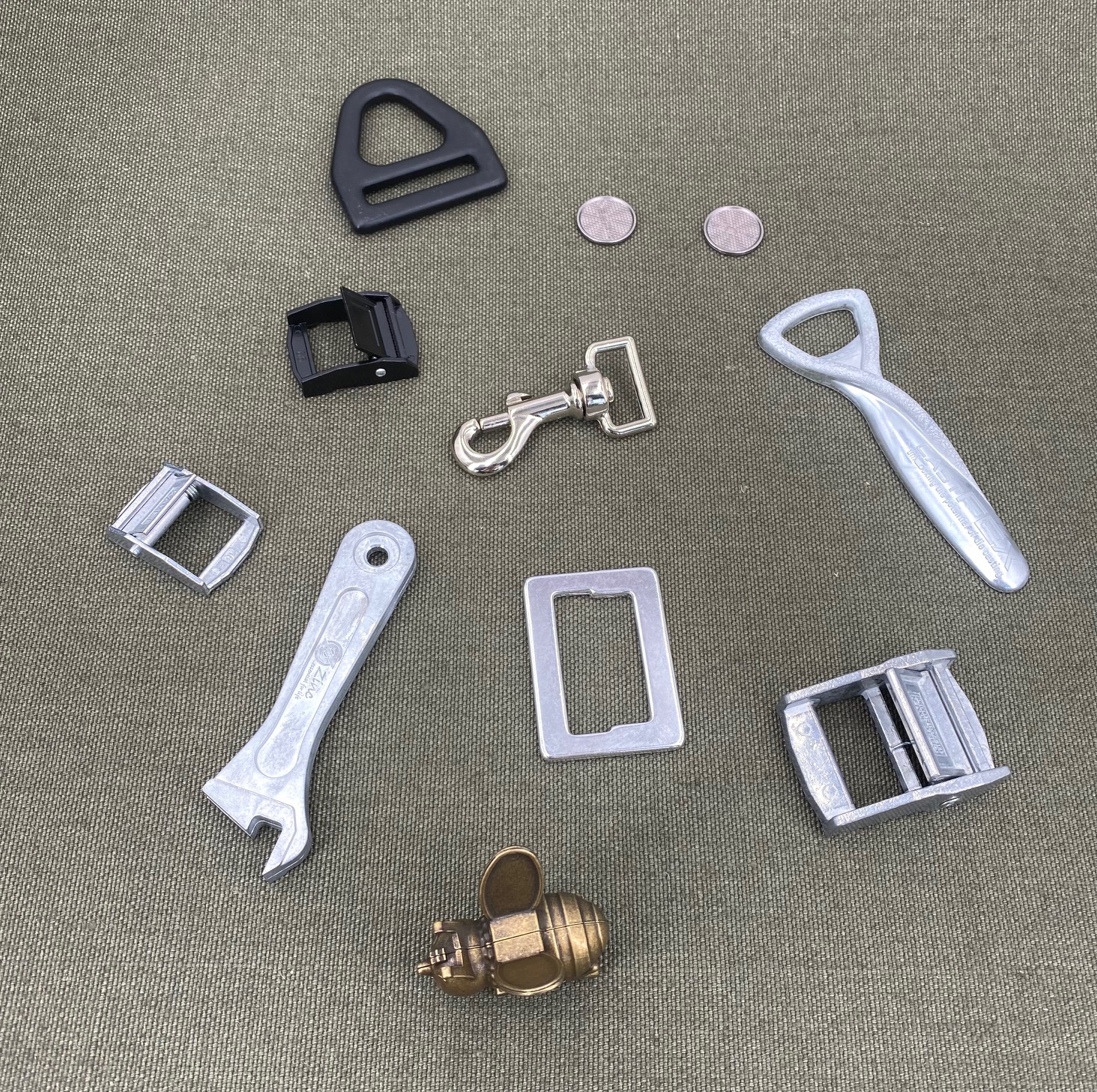
Sagaert's Expertise: Excellence in Zamak Injection Molding for Your Industrial Challenges
With deep historical roots in France, the Sagaert Group is taking a new step forward in supporting its industrial customers. Already a leader in plastic injection molding and precision machining, and drawing on the expertise of our four mold manufacturing facilities, we are expanding our offerings to include zamak and aluminum die casting.
Die casting is more than just a manufacturing process; it is the intersection of precision engineering and cutting-edge industrial performance. At Sagaert, a company specializing in metal fabrication, we have mastered zamak injection molding to transform your most demanding designs into high-precision metal components, optimized for high-volume production.
How does zamak injection molding work?
Hot-chamber technology
The manufacturing process at Sagaert is based on a thorough mastery of the casting process, just as our expertise in plastic injection molding is. Zamak injection molding primarily uses hot-chamber technology, a highly efficient method for mass production. This process involves injecting the molten metal directly from a siphon submerged in the holding furnace.
Melting and Holding: The zinc alloy is maintained at a precise injection temperature, typically between 400°C and 420°C, at which the metal is perfectly fluid.
Injection process: A hydraulic injection molding machine drives a piston that pushes the metal into the mold through a sprue.
High pressure: The metal is subjected to high pressure to fill every detail of the mold cavity and prevent porosity.
Cooling and Clamping: The press’s clamping force keeps the mold sealed during solidification, before the cooled part is ejected.
What are the advantages of zamak for your components?
Zamak plays a key role in modern industry for several reasons: dimensional stability that minimizes the needfor furthermachining, good natural corrosion resistance—which can be enhanced by surface treatment (chromate conversion coating, zinc plating, or epoxy paint)—and a high-quality finish straight from the mold that often simplifies the polishing process, a key advantage for luxury components.
Another advantage is the service life of the metal molds used for zamak, which can reach 1 million cycles—far exceeding that of the tooling used for aluminum die casting.
Precision Manufacturing: What Types of Parts?
Thanks to our industrial expertise and the equipment at our Saint-Amand facility, we manufacture a wide variety of zamak parts, ranging from a few grams to several kilograms:
Automotive: door handles, lock components, mirror mounts.
Electronics and Connectors: Enclosures shielded against electromagnetic waves, since zamak is an excellent conductor—a metal alternative to our plastic-over-metal overmolding solutions.
Construction: hinges, window hardware, plumbing fixtures.
Luxury and cosmetics: perfume bottles and leather goods, where the weight of the metal conveys a sense of perceived value.
How can we ensure the quality of zamak parts?
To ensure quality and compliance with the strictest geometric tolerances, Sagaert conducts inspections at every stage of production, starting with the design office.
Raw Material Selection: We use only certified zinc die-cast ingots.
Parameter monitoring: Temperature, pressure, and injection speed are monitored in real time on each machine.
Final inspection: Each batch of parts undergoes metrology testing and a 3D inspection to confirm compliance.
Your specialist partner for Zamak injection molding
Are you looking for companies that can offer you high precision and unfailing responsiveness? Sagaert offers you its state-of-the-art injection molding machines and its long-standing expertise in metal processing.
Our location enables us to serve customers throughout Europe, with efficient logistics and personalized support. Whether your needs involve a complex technical innovation or cost optimization for high-volume production, our team is ready to take on the challenge.
Contact our experts to discuss your project.
Zamak Injection Molding: Frequently Asked Questions
What is zamak, and why is it used in die casting?
Zamak is an alloy of zinc, aluminum, magnesium, and copper, produced using hot-chamber die-casting at temperatures of 400–420°C. It offers excellent dimensional stability, good mechanical strength, and a high-quality surface finish, all at a controlled production cost for high-volume manufacturing.
What is the difference between zamak injection molding and plastic injection molding?
Zamak injection molding uses a liquid metal (zinc alloy) injected into a metal mold, whereasplastic injection molding processes molten thermoplastic material. Zamak is the preferred choice when a part must provide mechanical strength, electromagnetic conductivity, or a sense of weight that plastic cannot offer.
Do you also manufacture molds for zamak injection molding?
Yes, our teams design and machine the metal molds specific to each project, drawing on the same expertise we’ve developed for our plastic injection molds andprecision machining operations.
Do you offer surface treatment for zamak parts?
Yes, the corrosion resistance and appearance of zamak parts can be enhanced through chromate conversion coating, zinc plating, or epoxy painting, particularly for parts used in the luxury goods or cosmetics industries.
Can zamak be combined with plastic in the same part?
Yes, for components that combine metal strength with plastic functions (housings, connectors), our expertise in plastic overmolding on metal allows us to assemble the two materials into a single part.
What quality control measures do you apply to zamak parts?
Each batch is produced from certified zinc ingots, with real-time monitoring of injection parameters, followed by a final audit that combines metrology tests and 3D inspection.
How do I get started on a zamak injection molding project with Sagaert?
Contact our experts with your blueprint or specifications: we’ll work with you to determine the technical solution best suited to your part and your production volume.